

Homebrew Extra Retro Gamer 281
Perseverance can be an important skill in making homebrew. Condense Team have spent SEVEN years creating Sonic GX (Amstrad Plus/GX4000); we’ll give it a full review next time, but you can download it at bit.ly/sonicgx-cpcplus. Meanwhile, in this issue, you can learn more about PICO-8 coding from the NerdyTeachers, meet a Swedish SEUCK guru, look forward to a clever mix of pinball and platformer, and check out three very varied games in the reviews.

QUICK LINKS:
TERRIFIC TUTORS - NerdyTeachers on PICO-8
Who are the NerdyTeachers?
The name "Nerdy Teachers" started as just a website for my very first project while learning web development many years ago. It was a blog site that I made with my wife, who is also a teacher, where we shared our broad nerdy interests related to classroom technologies, crafts, games, and more. And so there we were, two nerdy teachers with a website.
Over time, that project adapted gradually to follow my growing passion in PICO-8 game development until it eventually took over the entire site. Today, the name Nerdy Teachers has become my alias everywhere and includes a YouTube channel to teach how to code and make games. https://www.youtube.com/@NerdyTeachers
I am actually a primary school language teacher in Thailand, which may be a surprising background for someone teaching game development and coding, but I found that my style, education, and experience in language teaching transfers incredibly well when used in teaching coding languages.
So, while Nerdy Teachers actually refers to an individual, I like it as a reminder that my wife is still beside me in support of the project, and I have made great friends with some wonderfully enthusiastic PICO-8 devs with whom I often collaborate.
What got you interested in PICO-8?
In 2016, I was working at a tech-focused primary school, building their website, and teaching a range of subjects, one of which being coding. I knew that game development was the key to getting students interested and engaged with learning how to code, and I had personally experienced engines such as Unity, Unreal, and RPG Maker. I even used RPG Maker in a small classroom before this, but I realised I had to do most of the work myself, turning the game dev process into more like a Mad Libs game of "insert [character names, dialogue, map, items] here" and I did the work of piecing them together into a playable game.
The time required to learn the engine, as well as any third-party software or plugins, creates too long a runway to keep students engaged enough to get to making anything. So I was really looking for the best solution for my students to jump in and quickly discover the joy of creating, which fuels their desire to learn to code with as few barriers as possible in that cycle of learn and create, learn and create.
PICO-8 practically fell into my lap at the perfect point in time, as it was about a year old by then. I must have looked at a dozen or more options, and it was only PICO-8 that checked off every requirement I wanted: low barrier to entry, 2D only, all-in-one software, cute and vibrant, simple interface, fast and easy to create art and music, provides immediate feedback –I had a long list. PICO-8 does all of that so perfectly, I just fell in love, and so did my students.
How did you start creating tutorials and videos?
Where I was teaching, they were experimenting with more self-directed learning and individual-paced curricula. One way to accommodate that was to record and provide the lessons in small digestible parts that students could follow at their own pace, instead of the traditional 1-hour class "You better keep up!" style of teaching.
So, I started making videos about using PICO-8 and nervously shared them with the PICO-8 community. I received such positive feedback and amazing support, even with my then-terrible audio recording and questionable coding practices! The community was so welcoming and inspiring that they ignited my passion to build tutorials in my free time and make them available online for students far beyond my classroom.
Where did the idea of a PICO-8 fanzine come from?
The first PICO-8 fanzine had four issues and is still very relevant and useful today. It introduced and taught people how to start with PICO-8. Our webzine, Pico-View - https://nerdyteachers.com/PICO-8/Pico-View/, started years later and covers deeper, more advanced, and more recent news in the community.
You'd think starting a webzine would require a conscious decision and a lot of planning, but Pico-View materialised almost organically, thanks to its original mastermind, who went by Marina. (Marina's profile on the official BBS is at https://www.lexaloffle.com/bbs/?uid=70079)
I had been making tutorials casually on and off for years by then, and just returned to making content after the pandemic. Marina was fairly new to the community but was a prolific creator with their own unique style. They were one of the first to join the Nerdy Teachers Discord community, and they had been doing interviews with PICO-8 devs on the main forum. So, I offered Marina a space on NerdyTeachers.com to gather the interviews in one place and continue doing more. By the way, that is where the name came from: PICO-8 + Interview = Pico-View.
That first month's issue was entirely Marina's doing, just from reaching out to the community to contribute something small, like pixel art or a quote for her interview, and amazingly grew and grew over the month into full-blown articles, game reviews, and sharing lesser-known tips and tricks. It established a strong foundation for what the pattern of the zine eventually became.
A few dedicated community members became regular contributors (Achie, Luchak, Werxzy, Fletch, KumaKhan22, and more), and each month the zine got bigger and so did the work. I eventually took over most of the workload with the goal of twelve issues in 12 months, which I am very proud to say we achieved! Unfortunately, I could not keep up the time and effort for a monthly issue, so we scaled back to quarterly the following year and now annually.
The Pico-View webzine is a great way to see how deep you can get into PICO-8 Game Dev and really feel the passion from the wonderful community we have.
What is it about PICO-8 that you enjoy the most?
That's a tough question because it's hard to choose just one aspect of the software, not only because it works so well as a whole but because my honest answer, which might sound corny, is the PICO-8 community.
I spend much less time developing games myself because what I enjoy doing the most is checking in with other PICO-8 developers, players, and learners to see what unique games are being worked on, what new tricks have been discovered, what new hardware people are building, or what problems I could help solve. There are so many ways to interact with the people in the PICO-8 community because game development brings so many diverse creatives together, and I get the most joy out of supporting this community in as many ways as I can.
How do games get onto the Curated List?
The official library of games has over 16,000 PICO-8 carts, but many of those are not fully polished games, and they aren't tagged consistently for easy sorting and searching. So, we built our curated list based on the community ratings of stars. After sorting through them all, we found that games worth playing received at least ten stars, and so we started there and curated further to remove demos, songs, works in progress, and other unfinished projects, which brought the number of full games down to around 2,000.
From there, the community helps us go through them individually and suggest adding more tags to each game, such as genre and player count, to make them easier to find.
We update our list in December each year, adding the year's newest games that qualified and updating the number of star ratings for the whole catalogue. That allows us to find the highest rated to announce the top ten games of the year in Pico-View.
Then we update our lists of top 200 PICO-8 games from several time frames: past 1 year, 3 years, 5 years, and all time. That page has proven most useful for players seeking what to play when they discover PICO-8. It has become our most visited page, with soon to reach 200,000 views.
Is there a lot of work involved in hosting a game jam?
Hosting a jam does take quite a bit of work, but only in the preparation and the conclusion. The more thoroughly prepared a jam is, means there are fewer questions and problems during the jam itself. Once it is over, if it was a casual jam, then that's it, enjoy playing what everyone submitted, but if there is a contest element to the jam, then judging begins, and that can be very time-consuming and even stressful.
However, every game jam I've participated in, judged, or hosted has been a lot of fun and worth the effort. I hope to host more jams myself, especially as events for giving away free PICO-8 licenses or helping beginners get started in game development.
What would be your main advice to someone starting with PICO-8?
As a player, prepare to jump into an ocean of fun games and don't feel bad about spending just 2 to 5 minutes trying out all sorts of titles, building your own personal library of favourite games that you can come back to play in depth later, because there are so many great games to play for free.
As a developer, prepare for a highly rewarding journey, with emphasis on the journey. PICO-8 may fool you with how simple it is to jump in and make something quickly, because it also offers great depths that take a lot of work and learning to explore. That's why I like to present PICO-8 game dev as an Adventure RPG. I want game dev students to enjoy every step of the learning process. Many people come in with their dream game in mind, and they really just want to know how quickly and easily they can make it. But then they often abandon or set aside their dream of making games because they get overwhelmed by how long a road it is and just how much time, knowledge, and skill it takes.
However, if you treat the learning process as an RPG, where each step gains you more experience and better tools, and you are levelling up with each challenge, then tedious study of code logic or formatting can actually feel like meaningful progress, which it is! Also, overcoming large hurdles such as understanding difficult concepts like tables, loops, or collisions can feel like defeating a mini-boss, which can be just as rewarding as releasing a full game.
To put it simply, my advice to new developers is to come in with not only the goal of making a game, but also the goal to enjoy the actual process of making games.
Have you tried Picotron?
I bought Picotron as soon as it was released and booted it up only once! But not because I didn't like it. I felt a strong temptation to drop everything else and devote all my time to it. I wanted to build a dedicated computer that only ran Picotron and just get lost in developing apps, tools, and games with it. It felt like a new world opened up with unexplored territories and vast possibilities like the early days of PICO-8, where the community was pushing every limit, finding every bug and hidden feature, and suggesting or building improvements.
I then felt really sad and scared that I might leave PICO-8 behind and drop all the projects that I still have on my long to-do list. A lot of those are not just games I want to make, but tutorials and community tools I want to build for others. So, I decided to deny myself Picotron for now.
I would love to return to Picotron further into its development, and after I have achieved at least the biggest goals I have in PICO-8. I really look forward to bringing my bigger game ideas over to Picotron and maybe expanding my website to include content for that as well.
Which PICO-8 creators do you admire?
Wow, that is such a long list. I actually took a month to personally reach out to everyone I recognised as being impressively creative, helpful, innovative, knowledgeable, dedicated, prolific, or skilful in the community and gathered and shared that list on our site as Community Starshttps://nerdyteachers.com/PICO-8/Community/, where they could introduce themselves and everyone in the community could get to know these familiar usernames better. I realised if I started naming names, I would eventually name everyone on that list.
Can you name five PICO-8 games you would recommend?
That is always difficult, especially keeping it only to five. In fact, this is why we made the Top 200 list - https://nerdyteachers.com/PICO-8/Games/Top200/, because we saw this question being asked so often by new players, and I only saw a handful of titles being offered, when the truth is, every one of the top 200 is worth mentioning. But I won't dodge the question with only that.
Here are 5 personal favourites that are already well recognised in the top 200:
Motion Rec by Shomaisshi is a perfect example of prototyping an innovative game mechanic in PICO-8. https://www.lexaloffle.com/bbs/?pid=motionrec#p
BAS by yokozuna is a fast-paced 2-button action game that became a great high-score chasing challenge among my friends. https://www.lexaloffle.com/bbs/?pid=bas#p
Beckon the Hellspawn by Lokistriker is a fantastic Survivors-like game that I return to often. https://www.lexaloffle.com/bbs/?pid=beckon_the_hellspawn#p
Islander by Carson K is a peaceful resource-gathering and crafting game that simplifies the genre so well to fit in PICO-8. https://www.lexaloffle.com/bbs/?pid=islander#p
Kalikan by LouieChapm is the only shmup that I keep wanting to play again and again. https://www.lexaloffle.com/bbs/?pid=kalikan_menu#p
And here are 5 games that I love that many people might have overlooked:
Sorted Inc. by voidgazerBon is a high-stress resource organising game that gives my brain the perfect task of balancing order and chaos. https://www.lexaloffle.com/bbs/?pid=sorted_inc#p
TMNT Shredders Prevenge by Wolfe3D is an impressive long-term development project that is fun to play and extraordinary to peek under the hood at. https://www.lexaloffle.com/bbs/?pid=tmnt_sp_start#p
Last Words by somnule is a true diamond in the rough in my eyes and an amazing example of managing to fit a meaningful story in a small world with minimal dialogue. https://www.lexaloffle.com/bbs/?pid=last_words#p
Go-Go Garden by MarinaMakes is, in my opinion, the best example of real-time simulation in a PICO-8 game, where you simply grow cute pixel plants little by little each day. https://www.lexaloffle.com/bbs/?pid=gogogardenv1#p
Picodex by alanxoc3 is another incredibly impressive achievement of development, where a huge amount of art and data is squeezed into a single PICO-8 cart.

How do you see the future of PICO-8?
PICO-8 has not even reached version 1.0 as a full release! But I think it is coming soon, and the development of Picotron is actually helping it get there. Even beyond that point, I see the community of both players and developers only growing as we get more handhelds that run PICO-8 well, more game jams will be held that suggest PICO-8 for fast development, and where more schools and classrooms introduce students to coding through game development in PICO-8. That last one is what I am really passionate about, and I hope to help make that happen for schools all over the world.
How can people help support your website and its work?
Anyone who wants to support our ad-free educational site, our efforts in making more content and tutorials, as well as sponsoring our events for helping beginner developers and giving away PICO-8 to those who cannot afford it, can donate or become a member on our Ko-Fi page - https://ko-fi.com/nerdyteachers
LINKS:
Website - https://bit.ly/nerdyteachers
YouTube - https://www.youtube.com/@NerdyTeachers
PicoView - https://nerdyteachers.com/PICO-8/Pico-View/
NEWS BYTES
Amiga: Zooperdan has been busy, releasing new games Yeet, Blok, and Wordz. zooperdan.itch.io/
Amstrad CPC: 21bloques has created a great conversion of Sega’s 1984 game Pitfall 2. bit.ly/pitfall2-cpc
Commodore 16: Green Beret C16 by Arlasoft is a reworked conversion of the classic coin-op. bit.ly/greenberet-c16
Commodore 64: Iapetus (our Champion Coder in RG276) released Zezito in the Glittering Caves, where you must paint all the platforms. bit.ly/zezito-c64 - and for Thomson MO5 at bit.ly/glittering-mo5
Game Boy: Pandora’s Blocks is a heavily customisable falling blocks game from Villadelfia, inspired by the Tetris Grand Master series, for DMG and Color. bit.ly/pandora-gameboy
Mega Drive: PSCD Games has made downloads of BattleWomen, Thunder Paw, Foxyland, and Alien Cat 2 free. pscdgames.itch.io/
Sinclair Next: Mike Dailly’s CSpect emulator is now only available to supporters of his Patreon. www.patreon.com/mikedailly
The Next can be emulated in the most recent version of MAME ( www.mamedev.org )
PC Engine: Don’t lose your marbles in the board game Kex from Newsdee, with music by VodSound. https://bit.ly/kex-pcengine
Plus/4: The Hungarian Game Dev Competition 2025/2026 runs until the 31st of March, and is open to Basic, Basic++, and Assembly entries. plus4gamedev.hu/
TIC-80: Keep the residents happy in city-building simulation Urbanity from the Plush Girls. bit.ly/urbanity-tic80
Vic-20: Video Chess is Aleksi Eeben’s port of Larry Wagner & Bob Whitehead’s Atari 2600 game for unexpanded Vic. bit.ly/chess-vic

.
DREAM DESIGNER - ALF YNGVE
[Info]
From: Sweden
Website: https://psytronik.itch.io/captainishtar2 - Captain Ishtar Vs the Federation's Most Wanted. Other Alf games can be found at https://psytronik.itch.io/
Format: Commodore 64
Previous game: Captain Ishtar Vs the Federation’s Most Wanted
Working on: Captain Ishtar in the Fortress of Fear, and a Twin Tigers sequel
Alf has created over 100 games using the C64’s Shoot ‘Em Up Construction Kit (SEUCK).
When did you start using SEUCK?
I read about the original 1987 release of the Shoot ’ Em Up Construction Kit in ZZAP! 64 Magazine, before the tape version arrived in my country, Sweden. I immediately started to write and draw design notes in preparation for using it. And as soon as I could buy the software, I got to work. Guerilla!, one of my earliest games, was made in 1988 but was released several years later through Binary Zone PD.
Do you plan your games before creating them?
Extensively. I fill notebooks with sketches, schematics of game mechanics, enemy movement patterns, drawings of sprites, backgrounds, cut scenes… and I write plots and in-game text. A crucial part of the planning stage is to test the basic game mechanics early on – to make sure that gameplay will be functional and glitch-free. (It does happen that a project gets stuck while I work out glitches.)
What have been your favourite enhancements to your games?
Linked player controls have opened up various design opportunities – for instance, Operation Firestorm or my Double or Nothing games. Martin Piper’s SEUCK Redux coding framework has been great for me, as it allows for enemies to take aim at the player and has boosted technical performance. Right now, I’m learning to use a cool new POKE code that makes enemy movements loop and repeat.
And the great soundtracks that Richard Bayliss composed for many of my games also count as enhancements! They add so much mood and engagement.
What games inspired the Captain Ishtar series?
Game Over from Dinamic, Xain D’Sleena – the original arcade game – and the C64 version of Flash Gordon. The intent was to create a fun space-opera adventure (and to deliver the experience that Game Over promised but failed to deliver).
What can we expect in Captain Ishtar 3?
Varied gameplay, and things I haven’t done before – such as a proper platform stage with gravity and jumping. There will be a “3D” driving segment using very large sprites. There are also many cut scenes, and I’ve tried to avoid making each stage too long. And Captain Ishtar herself gets more space to be a character.
What made you decide to remake Twin Tigers?
I had practically forgotten about that game… until someone begged me to do a remake/sequel. (Bear in mind that I’ve made over 100 games over a period of more than three decades.) I usually only do that if I’m certain it can be made better than the original.
And in this case, lots of improvements are possible. This remake/sequel will be far more intense than the original; enemies will be more interesting, and the backgrounds will use hi-res mode plus background animation.
Do you have any other projects in progress?
I’m planning at least two more Captain Ishtar games, a sequel to Star Skimmer, remakes of my earliest games… and I have so many unfinished projects in store. I could keep on doing this for another three decades.
What other SEUCK games have impressed you?
Carl Mason has made very good game graphics in SEUCK – check out Dodo’s Deep Doo-Doo, for example. But when it comes to combining graphics, gameplay, and code enhancements, it’s Eleanor Burns who has excelled – with well-designed games like Synthia in the Cyber Crypt and Thunder Bird.
Anyone can make good SEUCK games. I try to tell other SEUCK users to put in the extra effort to make their games not just good-looking but playable, and I encourage the use of code enhancements to the original software. (Pro tip! Look up the “SEUCK School” page on Richard Bayliss’s website to learn more: https://tnd64.dreamhosters.com/SEUCK_School.html .)

DATABURST - REVIEWS
Chew Chew Mimic
Format: Dreamcast (reviewed), Steam, NES
Credits: Rigg’d Games (original development), Lowtek Games (conversion), OrcFace Games (publisher)
Price: Physical CD £7.50 plus postage, digital download £9 (includes soundtrack & manual PDF)
Four hapless knights go in search of treasure chests but only find the nasty knight-devouring Mimics. The excellent physical CD comes with a QR code for downloading the digital files. Mixing Soko-Ban with Chu Chu Rocket results in a brain-twisting game with an excellent soundtrack; the cartoon cutscenes add humour. The gradually increasing difficulty curve makes this a must for puzzle fans.
[Score] 88%

Sacred Line III
Format: Mega Drive
Credits: Sasha Darko
Price: $14.99 (digital download)
Web: https://bit.ly/sacred3-megadrive (digital download)
http://sashadarko.com/sacred-line-iii/ (physical preorders)
[Body] 120 words
The third game in Sasha’s trilogy, the “Previously on Sacred Line” menu tells you what happened to sisters Ellen and Sarah from war-torn former Yugoslavia as they battled against an ancient cult. This visual novel features atmospheric graphics and a distinctive, moody soundtrack as the sisters make their way back to the cult’s village headquarters. This horror-based game is not suitable for younger players and will send a chill down your spine.
[Score] 80%

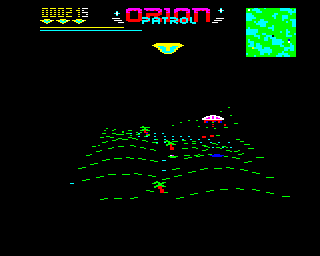
Orion Patrol
Format: BBC Micro
Credits: Angus Hughes
Price: Free
Inspired by the classic Archimedes game Zarch (Virus on ST/Amiga), your Cobra Mk 1 fighter moves by tilting and rotating, then firing the main thruster. It takes time to perfect control of the ship, but the superb 3D effect is impressive for the hardware in this very likeable game.
[Score] 84%
PROCESSING - BUZZ BUMPER (GAME BOY COLOR)
Interview with Britt Brady:
What games inspired Buzz Bumper?
A lot of different games inspired Buzz Bumper — Sonic Spinball, Kirby’s Dream Land, Super Mario Land 3: Wario Land, some of my previous work, and mascot platformers in general. I also get inspired by the general idea of things I don’t even enjoy playing, but the concept of them is interesting. At my day job, Doinksoft, we do this a lot — take what’s cool from old games that might actually be bad to play and try to make something better out of those ideas.
A big driving factor is using the aesthetic of pinball to influence the design. There are a lot of pinball games that borrow their characters, aesthetics, or tone from platformers — but what I’m doing is the reverse. I’m taking pinball aesthetics and letting them drive the mechanics and worldbuilding of a platformer. I think people sometimes assume aesthetic is a coat of paint added after gameplay is done, but I think they can both feed into each other in a development loop.
What is your development environment?
We’re using GB Studio. It’s a beginner-friendly engine that speeds things up early on but also creates a lot of challenges when you try to push advanced mechanics because of its limitations. That said, I probably wouldn’t be making a Game Boy game at all if GB Studio didn’t exist. Getting my first experiment running on real hardware so quickly got me hooked. It also keeps expanding with new tools, features, community support, and plug-ins.
Working with Pearacidic has been great — they’ve been using GB Studio since the early days and have a lot of tricks up their sleeve.
How are graphics and music created?
I make the graphics in Pyxel Edit, which I’ve used for every game I’ve made for over a decade. I draw everything in monochromatic colour and then apply a Sega Master System–style palette to individual elements inside the engine.
Music is being made by ZBW in the Hugetracker. Once I started using GB Studio, I begged them to learn a tracker. They’re an incredible musician I’ve worked with before, including on the soundtrack for Demon Throttle on the Switch.
What features are you hoping to add?
We want to add a lot more interactive mechanics based on pinball and classic mascot platformers — flippers, wireforms or ziplines, scoop cannons, and anything else that sounds fun as we go. We’re also talking about special stages like a surfboard section to mix up the gameplay and keep things exciting, along with adding coins or other collectables to make the game more engaging.
Will you be making physical carts as well as a digital download?
Yes, physical carts are a big goal. A physical release is one of the main driving forces behind this project. I’ve been messing with Game Boy stuff for about two years now, and it’s a dream of mine to have at least one physical release. The Game Boy Color is one of the most nostalgic systems from my childhood.
When are you hoping to release the game?
I’ve been dealing with a family medical issue since shortly after I started working on Buzz, and it’s slowed things down a lot. So it’s hard for me to say when the game will be done, and I don’t want to rush it. I want there to be joy in making it, because I think when that joy is there, it shows in the final gameplay experience. We want to ensure the final experience is as polished as possible, and even if that takes a bit longer, I feel it will be worth it in the end.

CREDITS Game Design, Art, and Story by BrittBrady | Bluesky
Music & SFX by ZBW | Bandcamp | Soundcloud | Bluesky
Issue 281 of Retro Gamer was published on the 15th of January 2026
This blog was published on the 13th of June 2026
This is a personal blog, not affiliated with Future Publishing
All interview content published with consent


Comments