

Homebrew Extra Retro Gamer 285
We try to bring you the cream of the homebrew crop, and that means three great games are reviewed this time – with the news that Roguecraft DX will also be converted to the Spectrum Next ( thalamus.link/roguedx-next ) by Colin Reed. Our Champion Coder reveals more about his brilliant Spectrum 48K shmup, and we preview a superb Amstrad racing game. Our main feature is a great new MSX game that is launching soon, so read on.

QUICK LINKS
ROCKETMAN REVEALED
Interviews with Renovatio Retro Games Studio
Interview with Dani Tear:
What got you into making MSX games?
When I was a child, I used to go to arcade halls and play games like Green Beret, Phoenix, Ghosts 'n Goblins… So when I discovered that you could also play at home, I bought an MSX computer. Creating games always seemed like something magical to me; as a kid, I could never understand how they were actually made.
In 2017, I became friends with people who programmed MSX games as a hobby. That sparked my curiosity, and I started looking for information to learn how to program games myself. I began with BASIC and Turbo BASIC for MSX, and eventually decided to learn assembly language in order to make the most of the Z80 processor. In 2020, due to COVID-19, I had a lot of free time and dedicated myself seriously to learning game development.
What are some of the technical challenges in making an MSX game - choosing the graphic mode, moving graphics, fitting it into memory?
One of the appealing aspects of developing a game for MSX — or any computer or console from the 70s or 80s — is the memory limitation, and that’s where the real challenge lies. Creating a good game under those conditions is quite demanding.
With so little memory available, graphic resolution is limited, which forces the artist to refine their work carefully. The same applies to the musician, who must compose using only the three sound channels of the MSX PSG chip. The programmer, in turn, has to write highly optimised and efficient code. In short, memory constraints and technical limitations are the biggest challenges when creating a good game.
What inspired the development of Rocketman?
When I decided to create my first game, the initial idea was to make a simple 16K or 32K title for first-generation MSX computers. I have very fond memories of Jetpac from 1983; it was the first game I ever played on a computer.
When I was 12, I went to a neighbor’s house who owned a 48K ZX Spectrum, and we spent the whole afternoon playing Jetpac. I still remember that day very fondly, and since then I’ve had a special affection for that game. I thought it would be a great idea to create an MSX version, since one was never officially released.
I started programming it, and everything was going well until I realised that the ZX Spectrum works quite differently from the MSX. It doesn’t have a video display processor (VDP) or hardware sprites like the MSX does. At that point, I doubted I could achieve the same level of smoothness as the Spectrum version, so I decided instead to create an MSX game inspired by Jetpac, taking advantage of the MSX’s own technical strengths.
What other games did you draw on for game mechanics and ideas?
I’ve probably been inspired by quite a few games, both consciously and unconsciously. As I mentioned before, the one that influenced me the most was Jetpac.
The idea of item shops and the mini-game where you can earn extra minerals comes from Penguin Adventure by Konami. The vertical platform climbing may have been inspired by Rainbow Islands by Taito. The end-of-level bosses are reminiscent of The Maze of Galious by Konami, as are the items that enhance or assist the protagonist. And in Bubble Bobble, there are bubbles that form a word and grant an extra life; something similar happens in Rocketman.
Overall, I would say these are the games that most influenced me.
Are there any unique ideas or mechanics in Rocketman?
I’m particularly proud of the shop item selector displayed on the game’s HUD. I don’t recall any MSX game featuring something similar, although it’s probably more common in modern titles.
It was one of the first technical challenges I faced. The routine is fairly complex: it scrolls items in both directions, showing half of one item on one side and half of another on the opposite side until the selected item is centred. It may sound simple, but it’s quite tricky, since during the scroll the halves appear reversed compared to their final centred position.
I also had to fine-tune the scroll speed and how long each item remains visible. Then I needed to design a way to open and use the selector with the same buttons used for gameplay, without interfering with the character’s movement. That was also challenging until I found what I believe is the best solution.
What is your development environment and the major tools used?
I use Visual Studio Code to edit the game. It’s a great tool that makes programming much easier, especially when navigating variables, labels, and other references. It also syncs backups to GitHub, allowing me to revert to previous versions if needed.
To test the game, I use the openMSX emulator along with its built-in debugger (available since version 0.20). I honestly don’t know what I would do without a good debugger — it makes tracking down bugs much easier.
I use the Sjasm assembler and a calculator for hexadecimal calculations. For creating tiles, I use nMSXtiles, an older program that still works very well. I also use Tiled Map Editor, a very user-friendly and widely used map design tool.
For graphics editing, I use GIMP. Although it’s primarily an image editor, it provides many useful tools for simple game graphics. For sprites, I use a web-based tool called TinySprite, which is very intuitive and practical. And for the music, Gabriel uses Arkos Tracker 3, a powerful music creation tool for retro systems.
These are essentially the main tools required to develop Rocketman, although I occasionally use additional software for specific tasks.
How many levels/screens does the final version have?
The game consists of five worlds, each containing nine levels that must be explored vertically to complete them. Each world also includes its own item shop, a final boss screen, and four extra bonus screens where players can collect large amounts of minerals to purchase upgrades.
There are three different enemy types per world, each with completely distinct behaviours. In total, there are fifteen enemies, each with its own movement and attack patterns.
Additionally, there are a couple of extra vendors with some surprises.
Inside the shop, you can gamble your minerals — the in-game currency — against DOKI, a peculiar alien who challenges you to rock, paper, scissors. By paying attention to his phrases and gestures, you may be able to guess his next move.
There is also a hidden ally who will help you progress, although finding them won’t be easy. The game features a relatively long introduction for a first-generation MSX title and includes two different endings depending on the selected mode.
After completing the game, you unlock an animated jukebox where you can listen to all the game’s music tracks — around twenty in total.
What form will the physical version take (cartridge/tape/disk, any extras in the box)?
The game will be released in physical cartridge format, packaged in a sturdy cardboard box with a comprehensive manual and possibly some additional surprises. There will also be an option to purchase it with a poster of the cover artwork, and depending on demand, I’m considering producing a limited run of T-shirts.
How did Spanish artist Ángel Luis Sánchez become involved in creating the cover illustration?
I met Ángel Luis Sánchez at an Amstrad CPC users’ meeting. I love attending retro computer gatherings; I really enjoy seeing the work of other developers, as there are true artists creating incredible games on such limited machines.
Ángel Luis has created many posters for Amstrad CPC events, and I’ve always considered his work to be of exceptional quality. The level of detail and realism in his illustrations is truly impressive.
At that event, he was promoting a book featuring some of his artwork, and of course I bought a copy. While talking to him, I discovered he was the same illustrator who created many game covers for Zigurat during the 80s and 90s. I felt it would be a real honour to have him illustrate the cover of my game — the same artist behind many iconic covers from the golden age of Spanish software that I greatly admired.
Interestingly, some elements in the game were directly inspired by the illustration he created for Rocketman.
When are you hoping to release the game?
The game is currently in its testing phase, and a few musical elements still need to be finalised. It will be officially available this June at the users’ meeting organised by AAMSX (Asociación de Amigos del MSX) in the city of Barcelona.
The physical edition will be available for purchase at the event. Afterwards, it will also be possible to order the game by mail for those who are interested.
Are you working on any other projects?
At the moment, I have not formally started a new project, but I do have several ideas that I hope to begin developing as soon as possible. A couple of them are intended for first-generation MSX systems.
One concept involves a flying saucer game inspired by Time Pilot by Konami and Choplifter by Sega, but presented with a perspective similar to Zaxxon by Sega. I am also considering a remake of a classic 1980s arcade racing game. Finally, I have in mind a platform game with RPG elements designed for MSX2 computers and above, also inspired by an arcade machine from the 1980s.
What would be your dream MSX game to make?
I would love to work on a game similar to those developed by Lucasfilm Games in the late 1980s and early 1990s, such as the Indiana Jones titles or the first two entries in the Monkey Island series.
These were fun and enjoyable games that, in my opinion, could be adapted for MSX2. From a technical standpoint, it would be reasonably feasible to make such a project run on MSX2 hardware. Although technically it would be feasible to run on an MSX2, the main challenge would be the large amount of graphics required, which would need a team of artists and a significant amount of time. It would also be necessary to consider the physical media capable of storing all that graphical data.
What recent MSX games have you enjoyed or are you looking forward to?
I do not have much free time to play, as most of it is devoted to programming. Nevertheless, I always make an effort to try the games submitted to MSXDEV each year, and I consistently discover titles of remarkable quality. One example is Chikubi Ninja by Imanok, which is participating in this year’s MSXDEV competition.
Another game I spent considerable time playing a few months ago was Pampas & Selene: The Maze of Demons by Unepic Fran — a true masterpiece for MSX2. Bungarua by Retromixis and Westen House by Brain Games are also excellent examples of high-quality recent productions that I have enjoyed.
I am also closely following a couple of projects that are nearing completion. One of them is Nightstalker: Blood of the Ancients, a title inspired by the Castlevania series for MSX2, which looks extremely promising. The other is Prince of Persia for MSX2 — a long-awaited adaptation for the MSX platform, as versions existed for nearly every computer and console of the era except MSX. Fortunately, we will soon be able to enjoy a version that is almost identical to the original PC release, thanks to the outstanding work of the development team behind this highly anticipated port.

Interview with Peruho:
Daniel Perujo (Peruho) is a Spanish artist who lives on the Costa del Sol.
What did you do on Rocketman?
I only did a little.
One of the start screens — the one with the rocket and "push to start".
The animation for the dragon on that screen.
One of the shop characters (a cyber rat).
Two screens for the endings.
What tools do you use to create MSX graphics?
I mainly use Photoshop for assets and Aseprite for animations.
Are you working on any other projects?
I'm working on a Pac-Man version for the MSX2. Not only am I doing the graphics, but I'm also doing the programming in C using a library called MSXgl.

Interview with Toni Galvez:
Toni is a prolific retro artist, working on many homebrew projects.
What do you use to draw MSX graphics?
I use Cosmigo Promotion, with the MSX SC2 palette and 8x8 grid. It is really fast to pixel the graphics on this one.
Did any particular games influence the style of Rocketman?
At the beginning, Rocketman was pretty much influenced by Jetpac (Spectrum), but later, the game get his own personality; we added a shop, minigames, and items to use. Each world got its own look.
How does the MSX compare to other machines, and are there any particular MSX graphic modes you like to use?
The first-generation MSX is a computer system that, even at its release in 1983, used an outdated video chip (from 1979): either the Texas Instruments TMS9929A or the Toshiba T6950. It falls between the ZX Spectrum and the Amstrad CPC. It supported 32 monochrome sprites (but no more than four in a row), requiring larger objects to be rendered with background characters. My favourite mode to use is Screen 2; it allows for a lot of colour and detail. In the game Menace, I managed to mix colours by alternating two images, displaying more than 50 colours on screen.
I would like to add:
About the game bosses, I designed 4 of 5 bosses in this game, not only the look, but the behaviour. I am very proud of it; they even got a background (because in old games, the boss background in 8-bit was always black).
Are you working on any other projects right now?
Yes, I am working on games for the Commodore Amiga, Amstrad CPC and MSX. One of the games is Vespertino, an advanced racing game for Amstrad CPC.
(See more on this in the Processing section.)
What would be your dream MSX game to develop?
I enjoy making games that aren't supported on that system, like Uridium (which is one of the games that best utilises the MSX). Another game I'd like to make is a Double Dragon-style game, trying to make it look good despite the limitations.

For more on Rocketman, visit:
NEWS BYTES
Acorn Electron: Previewed in RG 273, the brilliant Chuckulus from Snuggsy187 has launched at bit.ly/chuckulus
Atari XL/XE: Brian Reifsnyder released his flicker-free Special Version of Elite. Dock with the AtariAge thread at bit.ly/elite-atarixl
C64: Donut80 have been converting their fun web games – Egg Feud, The Last Pumpkin, Marshi n’ Phoebe, Superstar Chefs, and Traps ‘n Gemstones. bit.ly/donut80-c64
Dreamcast: The DreamDisc ’25 jam had 20 great entries, found at bit.ly/dreamdisc25
Game Boy Color: Echoes Of Worlds is a roguelike platformer from Team Calamar Studio, published by Homebrew Factory (50 Euros). bit.ly/echoes-gbc
MSX: Mastropiero ported the Sega arcade classic Congo Bongo. bit.ly/congo-msx
N64: BotBoy64 from PsyOps Studio is a 3D platformer inspired by Chibi Robo. bit.ly/botboy64
Plus/4: Red Dwarf: Fiji or Bust is a light-hearted text adventure by Chris Snowden, released in memory of Rob Grant. bit.ly/reddwarf-plus4
Saturn: Celeste Classic leaps onto Sega’s console, thanks to en83. bit.ly/celeste-saturn
Steam: Battle for ASCIION is Relevo’s horizontally scrolling shmup, made with ASCII characters! Shoot over to bit.ly/asciion
TIC-80: ZAP brings us Retro Gunner, an awesome vertical shmup. Download for Windows at bit.ly/retrogunner
VIC-20: Misfit unleashed the superb Gravzronox, inspired by Thrust (requires 32K expansion). bit.ly/grav-vic20
ZX Spectrum: zxpresh released the excellent 48K run-and-gun Hell Yeah and the impressive Sweet Fightin’ +2 (128K only), featuring twelve familiar ‘World Warriors’ (pictured). zxpresh.itch.io/

CHAMPION CODER - JASON J. RAILTON
From: Farnborough, UK
Website: bit.ly/gogobunny
Format: ZX Spectrum
Previous game: Go-Go BunnyGun (ZX Spectrum 48K)
Working on: Unnamed platformer, New shmup
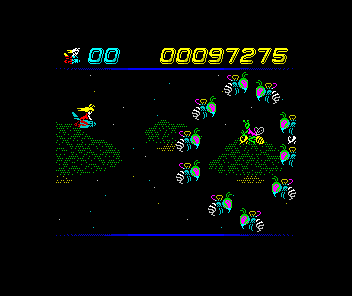
Jason worked miracles with the 48K Spectrum to produce the horizontal shmup Go-Go BunnyGun.
When did you first get into Spectrum programming?
I started programming in BASIC when I first got a Spectrum. Going by the covers of Sinclair User that I recognise, that must have been Christmas 1983. I didn't attempt machine code until much later, after learning - honestly not much - from INPUT magazine, and getting nowhere with the FORTH language 'games creator' White Lightning.
I tried programming some early multicolour effects after seeing demo programs in Your Sinclair. But all that didn't result in anything completed, and I bought an Atari ST after working weekends at Wilko for Christmas 1989. I started again with STOS BASIC, and the only completed game from my ST years was the original version of 'Buzzsaw'. I picked up an interest with the retro scene when I moved to take up a job in Farnborough in 2008, where I'd originally seen the arcade game Buzzsaw was based on (Cosmo Gang The Puzzle), and wondered if I could try multicolour effects again to bring that game to the Spectrum.
Why do you like to push the hardware and try new things?
I like the challenge of breaking preconceptions of what the hardware can do. Making something that people have said is impossible, or at least just assumed it is. The Spectrum takes a lot of stick for its limitations, rather unfairly overlooking what a massive difference its low price meant to families in the 80s, buying the technology and giving their kids a head-start on a computer-driven future. So it's fun to push those expectations and make people take a second look. And also, seeing what other people can do with those ideas, maybe shifting the boundaries even further, the way Einar Saukas has with his full-screen multicolour.
The Spectrum does have limited capabilities; it means it's a fixed framework. But within that framework are near-infinite possibilities. If you go beyond the 8-bit home computers, it becomes hard for one person to learn about every aspect of the machine. Whereas with something like the Spectrum, you can, and then you can see how all the different aspects of it can connect in ways no one has tried before. Part of the reason I've stuck with 48K rather than 128K games is that the extra memory and sound offer a whole other level of things to exploit, and I don't understand it enough yet to really make the most of it. I never had one myself, and I do wonder if the 128K wasn't the start of the death of bedroom programming; straight away, you could see programmers needing a 'graphics guy' and a 'music guy' to produce enough content for a viable game. Unless your name was 'Cauldwell', one person alone could no longer compete!
I do see a lot of people comment that it's not a Spectrum game without a chiptune. But to me, that's like saying the retro scene is somehow frozen in 1993, waiting for that one last cross-platform megagame before YS calls it a day. In retrospect, the 48K and the 128K are different platforms from different years with different capabilities. We likely all have more than one retro machine at home along with emulators, so I don't even see the point in trying to write a game for both machines; that's just going to result in a compromise. Either fit the game in 48K, or even 16K, because you can, or really use the sound and memory and screen-paging of a 128 in a way no rubber-keyed Speccy can match.
And something is going on in Go-Go BunnyGun that most people won't even realise. I struggle with the dedication needed for level design, so to get around it, there is no level data. The game is actually running a scripting engine. So I don't design a level; I write it as a text script. I don't program a wave of six enemies. I script a loop that inserts an enemy and repeats six times. Then waits while they whirl around and get shot down. Then chucks a few rocks at you and does it again. The latter halves of each stage often use random generation, within constraints, so they're different each time (and it saves on memory). Even the enemy flight paths are programmed as scripts, so at any point they can trigger a function to completely change their look or behaviour. So they can turn and run away if you fire on them, or raise a shield, or mob you all at once. The only other games I know that do anything like that are the LucasArts adventures with their SCUMM engine. Though I guess that's partly how AGD (Arcade Game Designer) games work as well.
What is your current development setup?
It's all done on PC, using Crimson Editor to write in assembly, with hotkeys to compile the code (PASMO assembler) and launch it in ZXSpin for testing and debugging. Full-screen graphics are done in ZX Paint, and the TAP files are put together in ZX Block.
For smaller graphics, I've actually written my own sprite editor that accounts for the Spectrum's colour attributes. It runs on the Spectrum, but then I can emulate it on a Nintendo DS using all the extra button inputs to operate keys, and so sketch out ideas on it whenever I have a moment to spare, on the train, etc.

What games influenced Go-Go BunnyGun?
Far too many to list here! Arcade R-Type is a big favourite, along with Chronos on the Spectrum and Wings of Death on the ST. Cotton, Thunder Cross II, Prehistoric Isle, Air Buster, Raiden, Raiga, Side Arms, and Blazing Star - all inspired a lot of the weapons and graphical style. Then there are games where I liked the look or idea, but it didn't really work for me as they stood - the weapon-switching of Hellfire seemed like one option too many, and Delta on the C64 looked great, but power-ups that killed you if you picked the wrong one were a bizarre form of punishment.
For the overall style, I wanted to create something like a spin-off from some anime series you'd only vaguely heard of. Or an oddly selective western re-hash of one like Battle of the Planets or Shogun Warriors (now that's showing my age, even in these circles!). And like anime, it would just assume you were OK with a whole lot of lore, backstory, fixations and catch-phrases that were never properly explained. So any oddity or random doggerel that sprang to mind just went straight in. The bunny-ears motif didn't necessarily come from the games people have suggested - it was more inspired by Madison Wolfe's look on the poster for 'I Kill Giants'. And it may seem a tad hypocritical, but I wanted the tech flight-suit look of something like Evangelion rather than the - shall we say 'less modest' - look of Keio Flying Squadron or Parodius.
The first level title, 'Beyond Space,' is nonsense lifted directly from the intro to Battle of the Planets. The second level title is from a Star Trek: TNG episode where the mayor from Blazing Saddles hijacks the Enterprise-D from a steam train on the holodeck. And the cityscape is from an establishing night-time shot of 'National City' (downtown L.A.) from the 'Arrowverse' version of Supergirl (which somehow turns into Vancouver during the day). The use of words from the rabbits' language in Watership Down was one for the real trainspotters. And I don't expect anyone to spot the origin of the 'KEF-Teddies', even if I post a recipe ('Keftedes' is a Greek word for meatballs).
I was also determined that it should work like an arcade game, so you can leave it running at retro events. So it has its attract mode with a show screen and music jingle, 'how to play' instructions that come up when you first play it, something like Shock Troopers or anything on the Neo Geo. And all operated by the joystick with one button, so no one has to reach for the keyboard every few seconds. That all cost a lot of memory that could have been used for sprites or levels, but I just wanted that look. Again, you could say 'well, 128K of memory would have helped', but I still wanted something that would have run on my original 48K Speccy.
How did you achieve so much colour and large, detailed graphics?
The flippy-over polo rings are based on something I designed back on my original Spectrum. In some ways, this game is nearly 40 years in the making! I wanted to see more and more colour, as so many games were turning monochrome. And even that brilliant Spectrum conversion of R-Type still only used colours on an all-black background. But it did show a game could work with whole-character-cell movement of sprites, if it looked good enough. I wanted something that would actually use the '2 colours in a character space' rather than just doing what people thought it meant. Hence, the red orb at the centre of the white ring.
I did just have a load of variants on that at the time, but refined it all more recently. The sprites are larger than a lot of Spectrum games at 24 x 24 pixels, or 3 x 3 character cells, but that lets me fit in more colouring possibilities. And the larger they are, the larger steps of movement you can get away with, which makes them quicker to draw on the Spectrum's screen.
I also wrote the sprite routine so that it could re-colour sprites on the fly. Games like Manic Miner can draw the same sprite in different colours, but the sprite design itself is simply monochrome. The code just sets the colour attributes around it independently. In my code, each sprite has a mask so you can recolour parts of it but not others, giving you the different player characters and more variety in the enemies while keeping the overall style. The bigger enemies are just sprites moving around in formation; you can see the separate pieces when they explode. And in the 'Cottontail' (hard) mode, it just goes all-out with randomised colours for the character outfits and the explosions.
As for the backgrounds, that was mainly inspired by Gradius Advance. The stippling let me draw things darker so the backgrounds didn't clash with the action, along with halving the amount of memory needed. Very carefully spacing the details out let me use more colours without clashing. And it's also less conspicuous when I'm cutting out big black squares around all the sprites to avoid more colour clash. I also liked the way those arcade shmups switch from open space to tunnels; I figured I could do the same using big sprites for rocks (referencing C64 Delta again) rather than needing a continual stream of scenery. The sense of parallax was a happy result.
The spinning 'orbiters' that drop weapons are actually based on a mistake - I'd seen the 'Bit' pickup in an arcade screenshot of R-Type in a magazine before I'd played it, and assumed they were this metallic dome with a fireball underneath. I had no idea at the time that they actually flip over; I animated mine rotating round and round with a plume of engine fire below.
Do you have any playing tips?
To expound a little on the instructions - the blue orbiters dish out power-up tokens. But don't just grab them straight away; wait, and they change colour. Match the colour to your current pilot, and you'll power up. Get a different colour, and you'll swap pilot, but you won't power up. So choose carefully. All 3 pilots have their uses, so try them out and experiment.
The gold orbiters drop fudge sweets - collect 5 in a level for a bonus and an extra life at the end. But some are hidden. In a few places, it pays to hold off firing to draw out all of an enemy wave, so you can take them all down. And then you might find yourself rewarded.
Also, don't immediately dismiss Heidi's orbiting 'Hoon'. Holding FIRE lets you lock it in a diagonal position, where it serves as both shield and battering ram. It's particularly destructive against the bosses on levels 3 and 5. And a hint for that dragon: hit the tail first to knock out its shield, then go for the head.
Are you working on anything else right now?
I have a couple of ideas for a multicolour platform game; really just two different themes, so they may get merged into one, or turn into one big game and a lesser side-project. I've also been refining some of the leftover graphics I couldn't fit into Go-Go BunnyGun, so there may be another shmup to come longer term.
First, I want to see what I can do to enhance sound effects using the 128K sound chip, before I give in and see what music can be played with what's left! And also work out some strategies for using the memory-paging most effectively.
What would be your dream Spectrum game to create?
The Spectrum has a lot of games, but I find many are genres that are done better elsewhere these days, either indie or under emulation, so it takes something special to make me want to specifically play a Spectrum version of a game. So, in programming, I want to make a game unique enough that I'd like to play.
There are two areas I'd like to try. The first would be a multi-genre game, maybe a platformer, a shoot-'em-up minigame, an overhead maze or an overworld map. Games like Jason's Gem and Finders Keepers were early examples, but Nintendo really made more of this style with the later Game Boy iterations of Mario and Zelda. And I like how games like Crash Bandicoot could seamlessly switch from 3D to 2D platforming and back again. A game that gives you some new twist to the gameplay at each stage would be quite special.
The other area I keep experimenting with is 3D. Lots of things come together here. I was always intrigued by the city block rendering in Sky Ranger, and more recently, the fantastically fast raycasting in World of Spells. I'm also inspired by the huge scope of free-roaming maps ranging from Damocles on the ST to modern games like the Just Cause series and Subnautica. So maybe some sort of island-hopping game like Cyclone, but in 3D, or some questing cross between Lords of Midnight and early 3D Zelda. Although Xelden Ring has already done something similar - impressively - on the MSX. For a first-person view vehicle game, I've always wanted to implement twin-stick control, not just for Battlezone but more like Virtual-On or Air Inferno, but that might be more something to try on an Atari ST.
I've also considered using the extra colours of ULA+. I'm a little disappointed that there are plenty of implementations of the colour palette feature, but not of the 8x1 multicolour mode. If I did do a game, I'd want to use all the colours I could, so there'd be no fallback possible for just the regular Spectrum palette. Not sure how well that might be received!
Is there anyone you want to work with?
Lee Bee, as his 128K music is brilliant. His mash-up of the Bubble Bobble and Back to the Future themes on BubbleBack is genius. But I want to develop some new code to combine music and effects, and maybe even ambient sounds for a scene. Also, as I did with Roger the Pangolin, anyone who can do some level design when I have a working game engine!
DATABURST - REVIEWS
Impossible Mission 3
Format: C64 cartridge/digital download
Credits: ICON64 (Developers - Trevor Storey, Stuart Collier, Saul Cross) and Psytronik (Publisher - Jason Mackenzie)
Price: TBC
Web: https://psytronik.itch.io/ (digital) / https://psytronik.bigcartel.com/ (physical)
The amazing intro to this officially-approved sequel reveals Elvin Atombender survived his fall at the end of Impossible Mission 2 – and is hacking computers to launch another global missile strike. The heritage is brilliantly respected, with the somersaulting agent and classic robots, while the modern touches add depth. There is backtracking and only one map (meaning no procedural generation to add variety), but it controls so well. This is a superb sequel and an excellent game that will keep C64 fans, new and old, engrossed.
[Score] 94% - Retro Gamer Sizzler

Gumball in Trick-or-Treat Land
Format: Game Boy Color
Credits: Mega Cat Games (Publisher) and Exquisite Laundry Pet LLC (Developer)
Price: $12 digital download / £31 cartridge only / £38 boxed cartridge with manual
Turned into a gumball and sent to Trick-or-Treat Land, you must return home with the help of a magic scarecrow. What follows is an Undertale-inspired RPG mixing humour with quirky battle mechanics. Cute graphics and music work well, while the smoothly increasing difficulty and fun plot will keep you playing. This is a sweet treat for Game Boy Color fans.
[Score] 90% - Retro Gamer Sizzler
Roguecraft DX
Format: Amiga, MEGA65, Game Boy Color
Credits: Thalamus Digital (publisher), Badger Punch Games/Retro Cogs/Rocketship Park (developers)
Price: $9.99 digital / £34.99 physical (Amiga, MEGA65) / £44.99 (Game Boy Color)
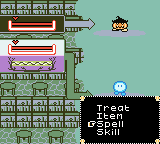
Launching on Evercade, the enhanced version of Roguecraft has transferred to Amiga and MEGA65. With gorgeous isometric graphics and an impressive soundtrack, one of three characters (Warrior, Rogue, and Wizard) makes their way through a dungeon filled with Lovecraft-inspired monsters. Shane McCafferty’s clever GBC version uses an overhead view, retaining all the features of the game – including mysterious potions with changing properties, secret rooms, newly added Achievements, and gold chests to plunder. The Rogue-like gameplay and procedurally generated levels will keep you playing, making all three versions an essential purchase.
[Score] 92% - Retro Gamer Sizzler

PROCESSING - VESPERTINO (AMSTRAD CPC)
Marco Antonio del Campo (MAC) introduces Vespertino World Racing, an impressive racing game.
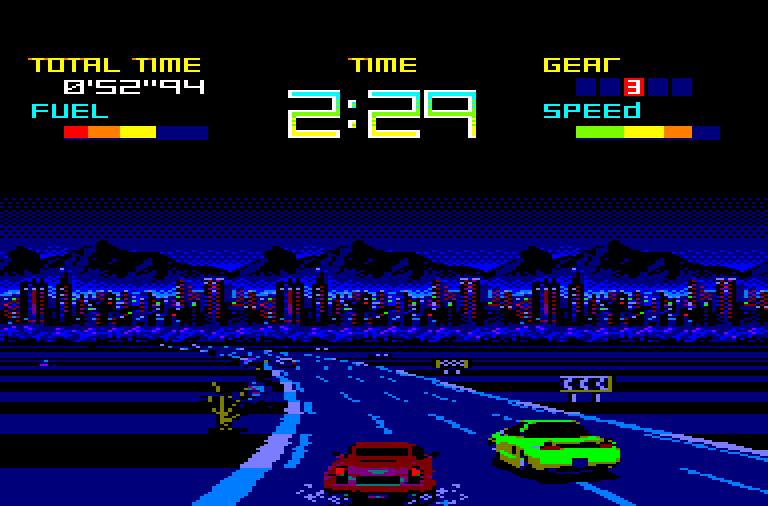
Today we bring you new updated information on the status of Vespertino World Racing, a racing game for the Amstrad CPC so ambitious that some still think it's just smoke and mirrors. The title will combine a mainly arcade style with slight simulation influences and will feature 12 locations around the world, each with different environments: morning, afternoon, night, desert, and snow. It will include three game modes:
• VWR Prize: the player will compete against the clock throughout all races.
• Multiplayer Tournament: this will be contested in knockout rounds.
• Practice Mode: allows you to choose and race any race freely.
You will be able to drive four different cars, each with its own characteristics, and all of them will be upgradeable. In Vespertino World Racing, you will not only test your driving skills, but you will also have to make strategic decisions by managing your finances. You will earn money based on your achievements in the game and will be able to buy and sell new cars and different add-ons.
As for the music, the idea is that players can choose a playlist to match their mood while driving, so we try to cover a range of styles. Some tracks lean more towards a retro, chippy, nostalgic vibe, while others are a bit more modern and fast-paced. In this regard, we were interested in featuring music by different artists. For example, José A. Martín Tello (musician for Risky Woods and PC Fútbol by Dinamic) will be composing for a racing arcade game for the first time.
With all these elements, the intention is to make the experience feel much closer to a 16-bit game than a typical 8-bit one. The game will run on all classic CPC models.
In a turn of events, Vespertino World Racing will not be launched under the BG Games label, completely severing ties with the Batman Group team.
What inspired the game?
On the one hand, the projects that began to come out on cartridge in recent years inspired us to try to do something truly amazing for the platform. In terms of gameplay, our main inspirations are Lotus 2 (Amiga), Out Run (Arcade), and Our Run 2.
What tools and development environment do you use?
For programming, we use WinAPE, Notepad++, and NetBeans for tools. For sound, we use Arkos Tracker. For most graphics, we use Photoshop and Cosmigo Promotion. Cars, on the other hand, are treated differently, as we use 3D modelling tools, Lightwave 3D and Blender. This gives us the chance of smoother and more realistic car animations. Because of the number of frames, the game requires much more memory than a standard CPC game, so we will have extra RAM and ROM memory inside the cart.
The cover is being illustrated in high resolution with the physical edition in mind, so the presentation screen that goes in the game will be a conversion retouched with the tool programmed by Rhino, Perfect Pix, for editing images in special modes on CPC.
How many tracks and cars will be in the game?
There will be 24 races set in 12 locations around the world. Among them, Indianapolis, Stuttgart, Monte Carlo, and Dakar are famous for their motoring traditions, and we also include Phoenix, Tampico, Rio de Janeiro, Ankara, Jakarta, Yokohama, Granada, and Montreal.
As for the cars, there will be 8 in total, including those you can drive and ‘enemies’. We won't reveal the actual car brands, but to give you an idea, the ones you'll be able to drive are very similar to an Audi R8, a Porsche Carrera GT, a Lamborghini Gallardo and a... Batmobile. And among those you'll have to dodge on the road will be a Ferrari Testarossa, a Honda NSX, a Lamborghini Diablo, and a Chevrolet Camaro.
But perhaps the fact that best gives an idea of the scale of the project is the more than 2,600 sprites with which we want to achieve a fluidity of movement above the norm in 16-bit racing games.
What is unique about Vespertino for the Amstrad?
Vespertino has very fast and smooth movement at full screen, on par with 16-bit games, and we use overscan to make the picture bigger. The car customisation will give something special to the game, helps to increase replay value and keep the interest. And we got a big soundtrack as well, with more than 10 songs to choose from. It will be the most technically advanced game on the Amstrad CPC, but we also want it to be more than just an arcade game, so it will include simulator and economic management elements. We want it to be a very complete game, so that money management mechanic will be an important part of the game strategy.
When are you hoping to release it?
We regret that we cannot commit to a specific date, but considering how much the game has been delayed, we would say sooner than many people think.
Development team: Rhino (Programming and game design). MAC (Graphics and game design). Toni Gálvez (3D graphics). TotO (cartridge design). José A. Martín Tello and Raft McMillan (Music)
Retro Gamer issue 285 was published on the 7th of May 2026.
This blog was published on the 16th of August 2026.


Comments